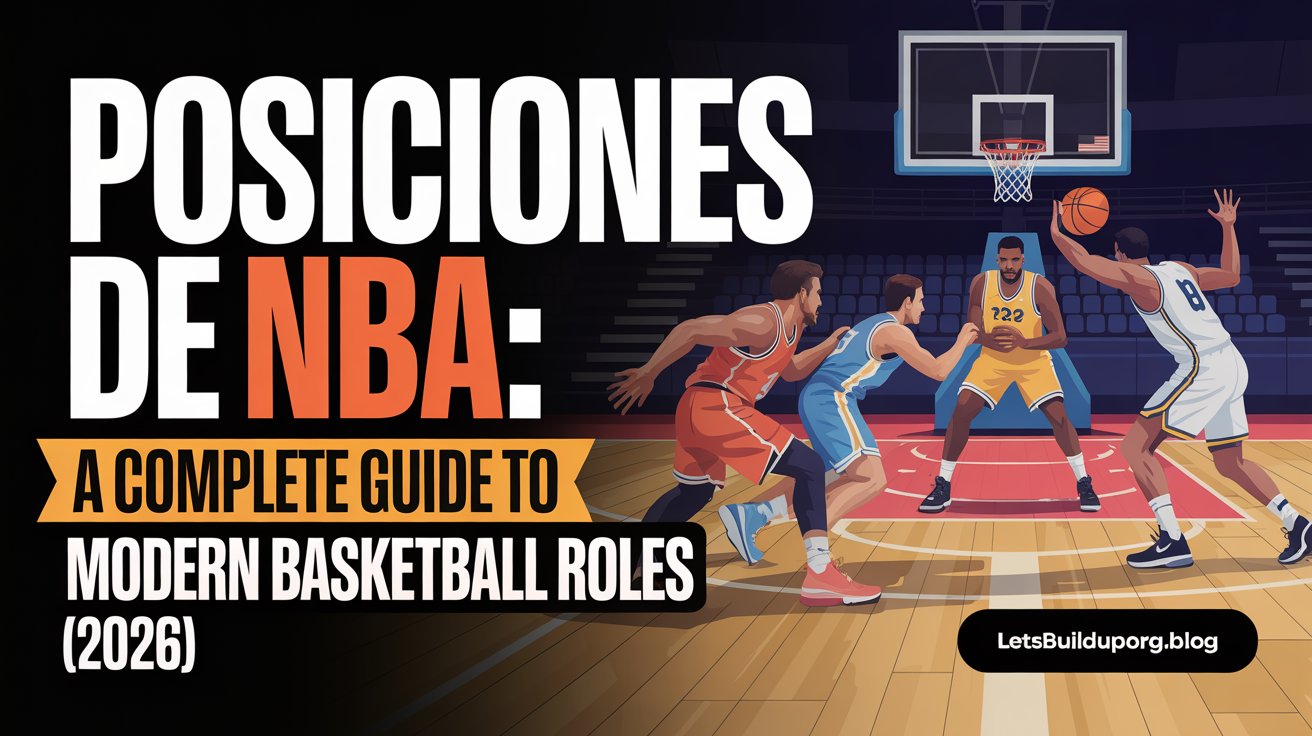
The game of basketball has changed a lot over the last few years. If you watched a game twenty years ago, every player had a very specific job. The tall guys stayed under the hoop, and the short guys ran with the ball. Today, posiciones de nba are much more fluid. We call this “positionless basketball.” In 2026, it is common to see a 7-foot player like Nikola Jokic passing the ball like a small guard. This makes the game faster and much more exciting for fans to watch.
When we talk about posiciones de nba, we usually think of the five classic spots on the floor. However, modern coaches now look for “skills” rather than “size.” A player might be tall, but if they can shoot three-pointers, they aren’t forced to just stand near the basket. This shift has allowed players to become superstars by doing a little bit of everything. Whether you are a casual fan or a hardcore stats nerd, understanding these roles is the first step to loving the game.
The Point Guard: The Floor General (Position 1)
The Point Guard is often called the “quarterback” of the team. In the world of posiciones de nba, this player is responsible for bringing the ball up the court and starting the plays. They need to have a very high basketball IQ. This means they can “see” the play before it even happens. Traditionally, these were the shortest players on the team, but today, we see giants like Luka Dončić taking over this role.
In 2026, a Point Guard must do more than just pass. They need to be a scoring threat. If a guard cannot shoot, the defense will just ignore them. This is why players like Stephen Curry changed the game forever. They forced the defense to come out and guard them far away from the hoop. Being a Point Guard in the posiciones de nba hierarchy is now one of the most difficult and highest-paid jobs in professional sports
| Rank | Player Name | Posiciones de NBA | Key Stat (PPG) | Efficiency Index | Market Value (2026) |
|---|---|---|---|---|---|
| 01 | Luka Dončić | PG | 34.2 | 98.5% | $62.1M |
| 02 | Nikola Jokić | C | 28.5 | 99.2% | $59.0M |
| 03 | Victor Wembanyama | PF/C | 26.8 | 95.4% | $55.2M |
| 04 | Jayson Tatum | SF | 30.1 | 92.1% | $58.5M |
| 05 | Anthony Edwards | SG | 29.4 | 90.8% | $52.3M |
| 06 | Shai Gilgeous-Alexander | PG | 31.5 | 94.6% | $54.8M |
| 07 | Giannis Antetokounmpo | PF | 28.9 | 97.1% | $57.9M |
| 08 | Devin Booker | SG | 27.2 | 89.9% | $51.5M |
Shooting Guard: The Sniper (Position 2)
As the name suggests, the Shooting Guard’s main job is to put the ball in the basket. In many posiciones de nba lineups, this player is the best long-range shooter. They often run around screens to get open for a “catch and shoot” opportunity. Think of players like Devin Booker or Anthony Edwards. They are athletic, fast, and can score from almost anywhere on the hardwood.
Modern Shooting Guards are also expected to be “3-and-D” players. This means they hit three-pointers and play elite defense. Because the NBA is so focused on spacing, having a great Shooting Guard is essential. Without one, the middle of the court gets too crowded. Among all posiciones de nba, the “Two-Guard” often provides the most “clutch” moments by hitting big shots when the clock is running out.
Small Forward: The Versatile Wing (Position 3)
The Small Forward is perhaps the most balanced of all posiciones de nba. These players are usually medium-sized—tall enough to rebound but fast enough to run with guards. They are the “Swiss Army Knives” of the league. A great Small Forward, like Jayson Tatum, can defend multiple positions and score in many different ways. They can drive to the rim for a dunk or stay back and hit a jumper.
In the current era of posiciones de nba, the Small Forward often acts as a secondary playmaker. If the Point Guard is being pressured, the Small Forward takes over the ball-handling duties. This versatility is why NBA GMs value this position so highly in the draft. If you have a player who can do everything, your team becomes very hard to beat.
Power Forward: The Modern Stretch-Four (Position 4)
Years ago, the Power Forward was just a “bruiser.” They were big guys who fought for rebounds and played very physical defense. Today, the posiciones de nba definition for a “Four” has shifted toward the “Stretch-Four.” This is a player who is big but can also shoot from the outside. By standing near the three-point line, they “stretch” the defense, leaving the middle open for their teammates.
Giannis Antetokounmpo is a perfect example of a modern Power Forward. He has the strength of a big man but the speed of a guard. In the mix of posiciones de nba, the Power Forward must be able to switch onto smaller players during a screen. If they are too slow, the other team will score easily. It is a high-pressure role that requires a mix of raw power and refined skill.
The Center: The Anchor of the Defense (Position 5)
The Center is usually the tallest player on the court. In the traditional list of posiciones de nba, the Center stays near the rim to block shots and grab rebounds. They are the last line of defense. However, the “Big Man” role has seen the most growth recently. Centers like Victor Wembanyama are now blocking shots at one end and hitting step-back threes at the other.
Having a dominant Center changes how the entire game is played. On defense, they make opponents afraid to come near the basket. On offense, they can be a “hub” for the entire team. Even though some people thought the Center was becoming extinct, the recent MVP winners prove that this is still one of the most important posiciones de nba.
NBA Player Wealth and Forbes Connections
Success in the various posiciones de nba leads to incredible wealth. According to Forbes, the top NBA stars are among the highest-paid athletes in the world. Their income doesn’t just come from their team salary; it comes from shoe deals, investments, and global branding. A top-tier Point Guard can easily earn over $50 million a year just from their court contract.
Why “Positionless” Basketball is the Future
The labels we use for posiciones de nba are becoming less important every year. Coaches now talk about “Guards, Wings, and Bigs.” This is because players are becoming so talented that they don’t fit into just one box. If a team has five players who can all dribble, pass, and shoot, they are almost impossible to stop. This is the “Golden Age” of basketball skill.
When you look at the best teams in 2026, you see players constantly switching roles. A Center might lead the fast break while a Point Guard sets a screen. This fluidity is the hallmark of modern posiciones de nba. It requires every player to be a “total package” athlete. The days of a player only having one skill are mostly over.
How to Choose Your Position
If you are a young player looking at the posiciones de nba, you might wonder where you fit. My advice is simple: don’t limit yourself. Even if you are the tallest kid in your class, practice your dribbling. Even if you are the shortest, practice your rebounding. The NBA looks for “complete” players who understand all aspects of the game.
The best way to learn is by watching the pros. Notice how they move without the ball. Pay attention to how they communicate on defense. Every one of the posiciones de nba requires leadership and hard work. By studying the greats, you can develop a “hybrid” game that works in any system.
The Impact of Data on NBA Roles
Data and “Analytics” have changed how teams view posiciones de nba. Coaches now use computers to track every move a player makes. They know exactly which spots on the floor are the most efficient. This is why you see fewer mid-range shots and more threes and layups. The math shows that these shots provide the most points over time.
Because of this data, certain posiciones de nba have become more specialized in certain areas. For example, “Corner Specialists” are players who wait in the corner to hit open shots. They might be Small Forwards or Shooting Guards, but their “role” is defined by the data. The game is now a beautiful mix of art and science.
Conclusion
The posiciones de nba are the foundation of basketball, but the players are the ones who bring the magic. From the tiny, lightning-fast guards to the towering, powerful centers, every role is vital. As the game continues to grow, we will likely see even more unique styles of play emerge. Whether you’re watching for the dunks or the deep threes, the strategy behind the positions makes every game a chess match on hardwood.
What do you think is the most important position in today’s game? Do you prefer the classic big man or the modern flashy guard? Let us know your thoughts and stay tuned for more NBA updates!
FAQs
1. What are the 5 positions in the NBA?
The five traditional posiciones de nba are Point Guard (1), Shooting Guard (2), Small Forward (3), Power Forward (4), and Center (5).
2. Who is the highest-paid player in the NBA in 2026?
As of the 2025-2026 season, Stephen Curry remains one of the top earners, with a base salary exceeding $62 million, followed closely by stars like Nikola Jokic.
3. Can a player play more than one position?
Yes! Most modern stars are “positionless,” meaning they can play multiple posiciones de nba depending on the team’s needs during a game.
4. What is a “Stretch Four”?
A Stretch Four is a Power Forward who can shoot three-pointers. This skill “stretches” the opposing defense away from the basket.
5. Why are NBA positions numbered 1 through 5?
Numbers are used as shorthand for coaches and announcers. For example, calling a player a “1” is faster than saying “Point Guard” during a fast-paced game.
6. Is the Center position dying?
Not at all. While the role has changed, Centers are more skilled than ever. They now pass and shoot from the outside, making them more dangerous than in the past.